Beat Corporate Dental Groups on Google Maps


You searched “dentist near me” to see where you land. And there it is at the top: a corporate dental group with a name you’ve heard on the radio. Meanwhile your practice, the one that’s been on Main Street for 18 years, sits buried below the fold. Frustrating doesn’t cover it.
Here’s the good news. That corporate group isn’t beating you because they have a secret. They’re beating you on a handful of specific things Google measures. Most of those things you can fix yourself, without an agency and without a huge budget.
Let’s walk through why it happens and exactly what to do about it.
Why Do Corporate Dental Groups Rank Higher on Google Maps in the First Place?
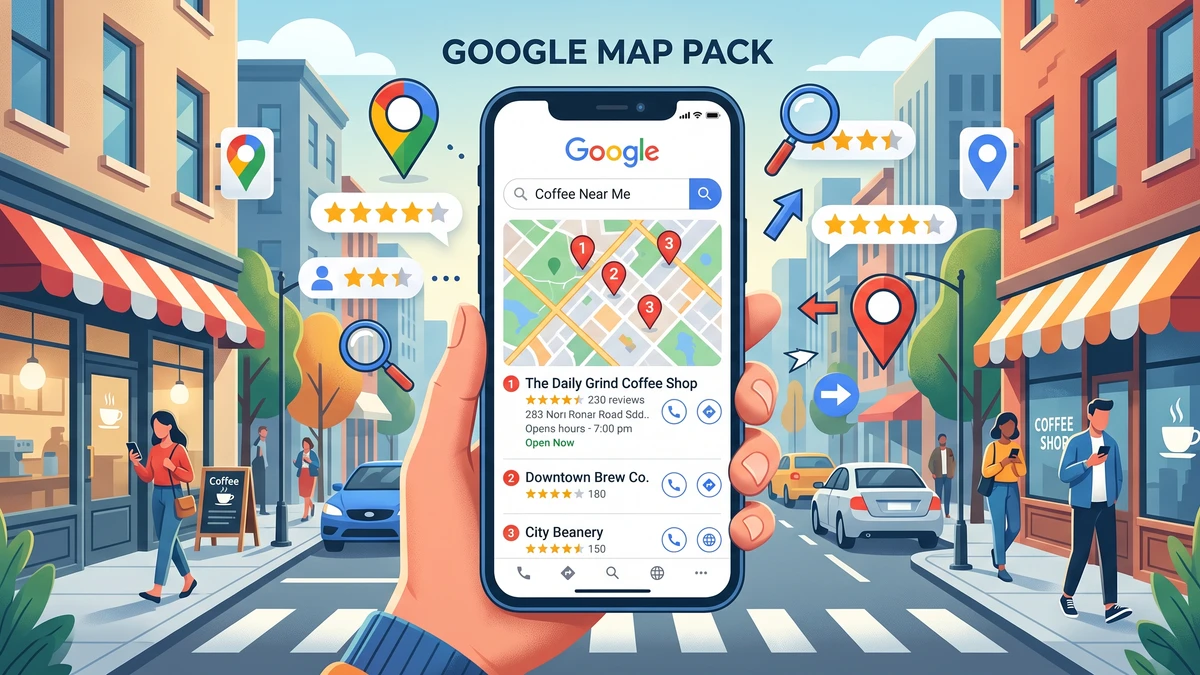
Corporate groups outrank independent practices because they treat their Google listing like a full-time job. They have staff, systems, and steady review activity feeding the three things Google’s map ranking cares about most: relevance, distance, and prominence.
Let me define those in plain terms, because Google actually names them:
- Relevance – how well your listing matches what someone searched. This comes from your business category, the services you list, and the words on your profile and website.
- Distance – how close your office is to the person searching. You can’t move your building, but this matters less than people think.
- Prominence – how well-known and trusted your practice looks. Reviews, review recency, website quality, and mentions of your practice across the web all feed this.
Corporate groups win mostly on prominence. They pull in dozens of fresh reviews every month across their locations. They keep their listings complete and updated. They have big websites that Google reads as authoritative.
None of that is magic. It’s just consistency at a scale most solo offices haven’t matched yet. And that’s exactly where you can catch up.
What Is a Google Business Profile and Why Does It Decide My Ranking?
Your Google Business Profile (the free listing that shows your practice in Google Maps and the local results) is the single biggest factor in whether you show up when someone searches for a dentist nearby. It’s more important than your website for map rankings.
Think of it as your storefront on Google. When it’s complete, active, and full of good reviews, Google trusts it and shows it higher. When it’s half-filled-out and quiet, Google has no reason to rank it.
Most independent practices claimed their profile years ago and never touched it again. The corporate group down the street updates theirs constantly. That gap is a big part of your ranking gap.
Start here. Go to google.com/business and make sure you’ve claimed and verified your listing. If you’re not sure whether you control it, search your practice name and look for an “Own this business?” link. That’s your first move.
How Do I Make My Google Business Profile as Strong as Theirs?
Fill out every single field, then keep it active. A complete, regularly updated profile signals to Google that your practice is real, open, and worth showing. Corporate groups do this by default. You can too, in about an afternoon.
Work through this checklist:
- Primary category: Set it to “Dentist.” Then add specific secondary categories that fit, like “Cosmetic dentist,” “Pediatric dentist,” or “Emergency dental service.”
- Services: List them out individually. Cleanings, crowns, implants, Invisalign, whitening. Each one helps you match more searches.
- Business description: Write 2 to 3 natural sentences about who you serve and what you do. Include your city and a couple of key services.
- Hours: Accurate and current, including holiday hours. Wrong hours quietly kill trust.
- Photos: Add real photos of your office, your team, and the reception area. Not stock images. Refresh them every couple of months.
- Phone number: Use a local number that rings your front desk during business hours.
- Website link: Point it to your homepage, or better, a page about the service you most want to be known for.
Then post to your profile like it’s a mini social feed. Google lets you add “Posts” – short updates about a new service, an opening for new patients, or a seasonal reminder. A practice that posts a couple of times a month looks alive. That helps.
How Do I Get More Reviews Than a Corporate Group Down the Street?
You get more reviews by asking every happy patient, every day, with a simple system that removes the friction. Reviews (and how recent they are) are one of the strongest ranking signals for local search. This is where you can genuinely out-hustle a corporate group.
Here’s the thing corporate offices have that you might not: a repeatable ask baked into their checkout. You need the same. It doesn’t have to be fancy.
Try this at the front desk. When a patient says something kind on the way out, your team member says:
“That means a lot, thank you. Would you mind sharing that in a quick Google review? It genuinely helps other people find us. I can text you the link right now so it’s easy.”
Then text them the direct link. Not “go find us on Google.” The actual link that opens the review box. Google gives you a short review link inside your Business Profile dashboard under “Ask for reviews.”
To make this run without you thinking about it, a review tool like Podium can send the review text automatically after each visit and route it to Google. That’s how the big groups keep a steady drip going. If you’d rather stay manual for now, that’s fine, just make the ask part of every checkout.
A few ground rules so you stay compliant and human:
- Never offer discounts or gifts for reviews. That violates Google’s rules and can get reviews removed.
- Ask everyone, not just the raving fans. A natural mix reads as genuine.
- Respond to every review, good or bad. It shows you’re paying attention and it gives Google fresh activity.
Ten thoughtful new reviews a month will move your ranking. Most independent practices get one or two by accident. Close that gap on purpose.
Does My Website Still Matter if the Corporate Group Has a Bigger One?
Yes, your website matters, but not in the way you’d think. For map rankings, Google mostly checks that your site is real, fast, works on phones, and clearly says where you are and what you do. You don’t need to out-build a 40-location website. You need a clear, focused one.
Make sure your site does these things:
- Names your city and services in the actual text. A homepage that says “Family and cosmetic dentistry in [Your Town]” helps Google connect you to local searches.
- Loads fast on a phone. Most patients search on mobile. A slow, clunky site hurts you.
- Shows your address and phone number the exact same way as your Google listing. Same format, same suite number, everything. Google cross-checks this.
- Has a page for each major service. One page for implants, one for Invisalign, and so on. Each page is another chance to match a search.
Consistency of your name, address, and phone number across the web (marketers call this your “NAP”) is a quiet ranking factor. If your address shows up three different ways on three different sites, Google gets confused. Corporate groups have people who police this. You can do a quick audit yourself in an hour by searching your practice name and checking each listing that comes up.
Is Distance the Reason I Can’t Beat Them, and Can I Do Anything About It?
Distance matters, but it’s rarely the real reason you’re losing. If a corporate office is closer to the searcher, it gets a small edge for that person. But a nearer practice with weak reviews and a thin profile still loses to a stronger one a bit farther away.
You can’t move your building. So put your energy into the things you control: reviews, a complete profile, and a clear website. Those outweigh a few blocks of distance more often than not.
One thing that does help with the local signal is being genuinely active in your community online. Get listed in your local dental society directory. Sponsor a local school event and get a mention on their site. These local mentions tell Google you belong to that area.
What Should I Fix First if I Only Have a Few Hours This Month?
Start with reviews and your profile completeness. Those two move the needle fastest and cost nothing but effort. Everything else is a slower build.
Here’s the order I’d tackle it in:
- Claim and fully complete your Google Business Profile. One afternoon. Fill every field.
- Set up a daily review ask at the front desk. Script it, text the direct link, make it a habit.
- Respond to every review you already have. Even the old ones. It signals activity.
- Fix your name, address, and phone so they match everywhere. A quick web audit.
- Add city and service wording to your website homepage. Small edit, real payoff.
While you’re improving your rankings, don’t lose the new patients you’re already earning. When someone finds you and calls, that call has to get answered and booked. It’s worth checking whether calls are slipping through the cracks. A little call tracking setup shows you how many callers actually turn into appointments. And if calls are going to voicemail at lunch, you may be handing patients straight to the corporate office without realizing it.
Ranking higher only pays off if the phone conversation goes well once they call. Fix both ends.
How Long Before I Start Outranking the Corporate Group?
Expect small movement within 4 to 6 weeks and meaningful movement in 3 to 6 months, as long as you stay consistent. Local rankings shift slowly because Google wants to see a pattern, not a one-time push.
The practices that win are the ones that keep asking for reviews after the novelty wears off. That’s the whole game. Corporate groups aren’t smarter than you. They’re just relentless about the basics. Match that relentlessness and your years of real patient relationships become an advantage they can’t fake.
You know your patients better than any corporate group ever will. Now you know what Google’s actually measuring. Put those two things together and you’ll climb.
Frequently Asked Questions
Can I really outrank a corporate dental group as a single location?
Yes. Single locations regularly outrank corporate groups on Google Maps by keeping a complete profile and earning steady, recent reviews. You’re competing on the same signals, and a focused solo office can be more consistent than a stretched corporate team.
How many Google reviews do I need to compete?
There’s no magic number, but recency and steady flow matter more than total count. Aim for at least a few new reviews every month. A practice adding fresh reviews consistently often beats one with a big but stale pile.
Is it against the rules to offer patients a gift card for a review?
Yes. Google prohibits offering money, discounts, or gifts in exchange for reviews. Reviews earned that way can be removed and can hurt your standing. Just ask happy patients directly and make it easy for them.
Do I need to pay for Google Ads to show up on the map?
No. The map pack (the local results with the map) is separate from paid ads and is free to rank in. Ads can put you at the very top, but a strong, review-rich Business Profile earns the map spots without spending on clicks.
Should I hire an agency or can I handle this myself?
Most of the highest-impact work – completing your profile, asking for reviews, fixing your address consistency – you can do yourself. Consider help only once those basics are solid and you want to scale further.
Get the Front-Desk Review Script That Beats Corporate Groups
Want the exact word-for-word review request script, the follow-up text, and a printable checklist your team can use at every checkout? Grab our free Google review swipe file built for busy dental offices – no marketing experience needed.